
Why Proof of Delivery Matters to Dispatchers?
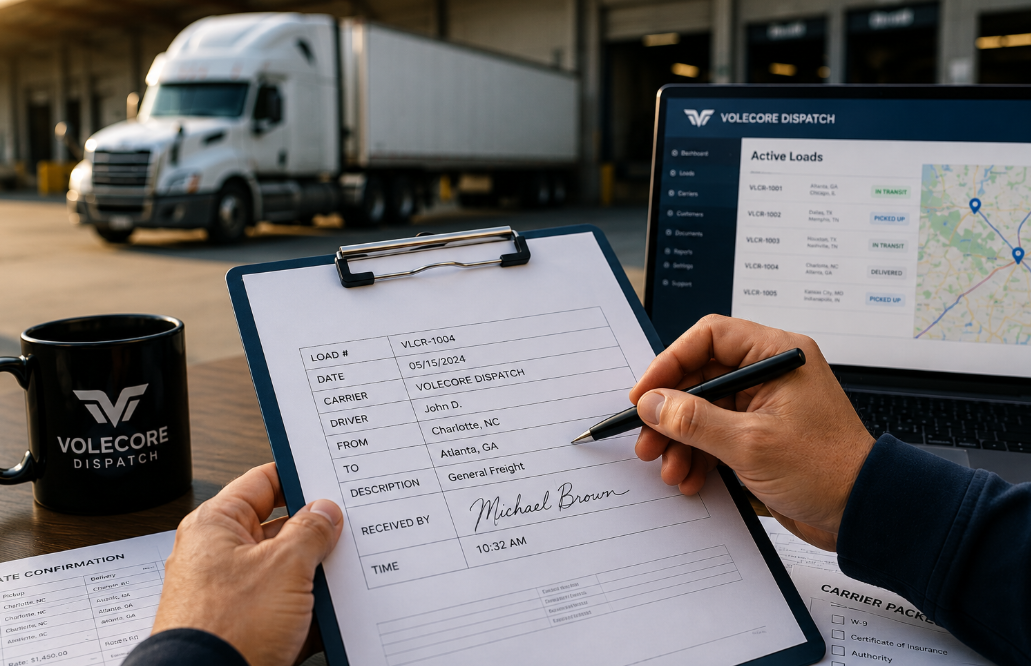
For a trucking company, delivering a load is only part of the job. The paperwork that follows is just as important. Proof of Delivery (POD) confirms that a shipment was successfully delivered and plays an important role in the carrier’s payment process.
At Volecore Dispatch, understanding and properly handling PODs is part of providing reliable dispatch support to carriers. For beginner dispatchers, learning how to manage PODs can help keep loads organized, avoid unnecessary delays, and maintain good communication with brokers.
What Is a Proof of Delivery (POD)?
A Proof of Delivery (POD) is a document that confirms a shipment reached its destination.
After delivery, the receiver usually signs the delivery paperwork, often the Bill of Lading (BOL). The signed document can then serve as proof that the carrier completed the delivery.
A POD may contain:
Load or reference number
Shipper and receiver information
Pickup and delivery locations
Delivery date and time
Freight details
Receiver's signature
Notes about damages, shortages, or other issues
Why Is POD Important to Volcore Dispatch?
As a dispatching company, Volcore Dispatch helps carriers stay organized throughout the entire load process—from booking to delivery. POD collection is an important part of that process.
1. It Confirms the Load Was Delivered
Once the driver completes the delivery, the POD provides documentation that the shipment was received.
This gives the dispatcher and carrier a clear record that the load has been completed.
2. It Helps With Faster Payment Processing
Brokers commonly require delivery documentation before processing payment. A missing or unclear POD can result in additional follow-ups or payment delays.
At Volcore Dispatch, making sure the required delivery documents are collected and submitted properly helps carriers complete the paperwork process more efficiently.
3. It Helps Protect the Carrier
Sometimes questions can arise about a shipment after delivery. A properly completed POD can provide important evidence about when and where the freight was delivered and whether any issues were reported.
If there is damage or a shortage, the driver should make sure it is properly documented before leaving the delivery location.
4. It Keeps Loads Organized
Dispatchers may manage multiple carriers and loads at the same time. Keeping PODs organized by load number, broker, and delivery date makes it easier to find documents when they are needed.
What Should a Volcore Dispatcher Do After Delivery?
A simple post-delivery process can help keep everything organized:
Step 1: Confirm delivery
Check with the driver that the load has been delivered.
Step 2: Request the POD
Ask the driver to send a clear photo or scanned copy of the signed document.
Step 3: Review the POD
Check that the document is readable and contains the required information and signature.
Step 4: Check for exceptions
Look for notes regarding damage, shortage, refused freight, or other delivery issues.
Step 5: Submit the documents
Send the POD and any other required paperwork to the appropriate broker or designated party.
Step 6: Keep the records organized
Save the document with the corresponding load information for easy reference.
Common POD Mistakes to Avoid
Beginner dispatchers should watch for:
Missing receiver signature
Blurry or incomplete documents
Incorrect load or reference numbers
Missing delivery information
Unreported damage or shortages
Late submission of documents
Failure to follow the broker's documentation requirements
If there is a problem with the POD, the dispatcher should communicate with the driver and broker promptly.
POD and BOL: What's the Difference?
A Bill of Lading (BOL) contains important information about the shipment and transportation.
A Proof of Delivery (POD) confirms that the shipment was delivered.
In many cases, the BOL becomes the POD once the receiver signs it at delivery. However, documentation requirements can vary depending on the broker or customer.
Final Thoughts
For Volecore Dispatch, successful dispatching doesn't end when the truck arrives at the delivery location. Proper documentation is an important part of completing a load.
By collecting PODs promptly, checking them carefully, and submitting them according to the broker's requirements, dispatchers can help carriers stay organized, avoid unnecessary payment delays, and maintain smooth communication with brokers.
A successful load isn't complete until the delivery and paperwork are properly handled.