
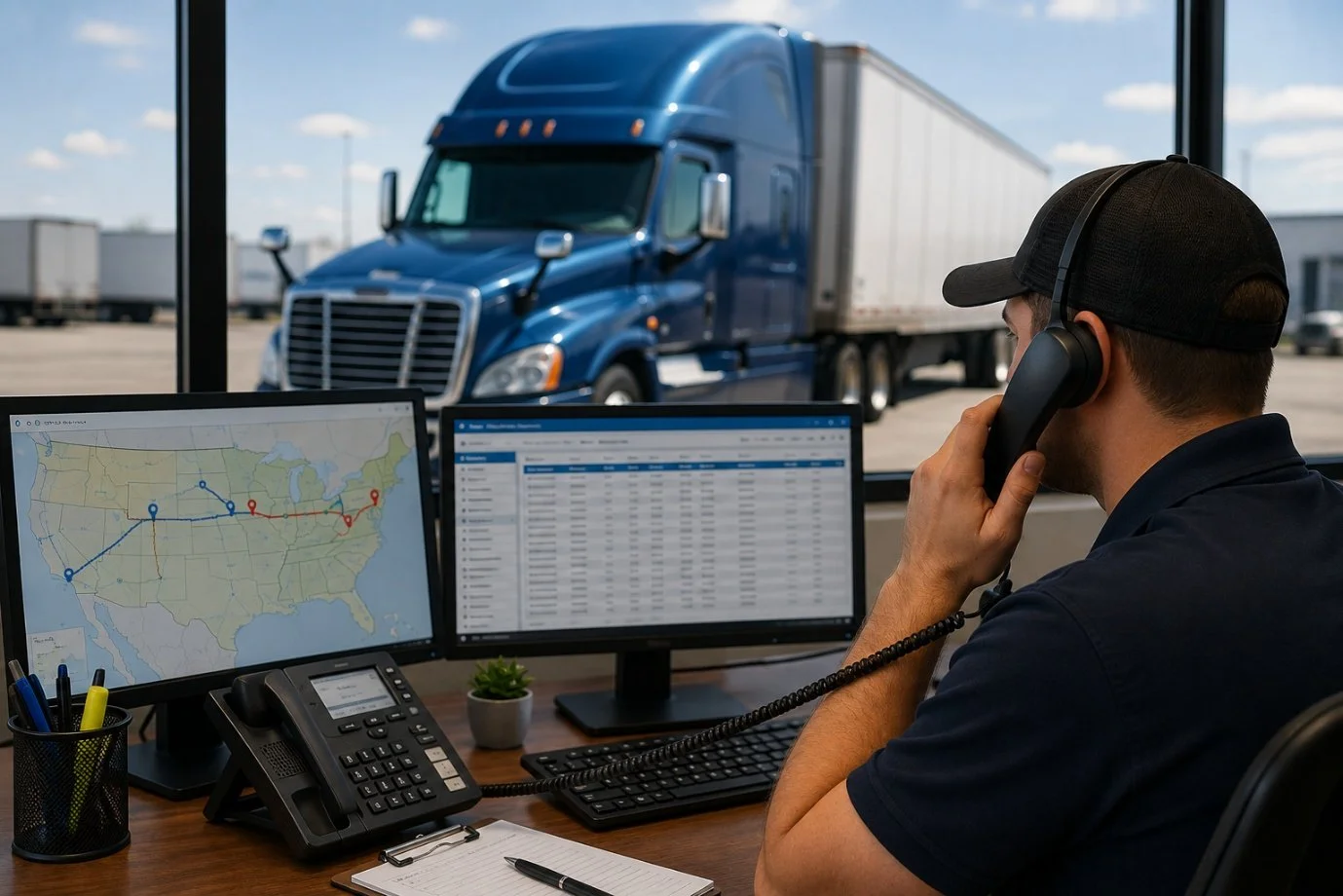
Working with a truck dispatcher can make finding and booking freight much easier for owner-operators and trucking companies. However, before a dispatcher can start finding suitable loads, they need important information about the carrier, truck, equipment, and operating preferences.
Providing accurate information helps the dispatcher find better loads, avoid delays, and negotiate more effectively.
1. Carrier and Company Information
The first step is providing basic company information, including:
Legal company name
USDOT number
MC number
Contact information
Company address
Dispatch contact or driver contact
This information allows the dispatcher to identify the carrier and communicate with brokers and shippers when booking freight.
2. Truck and Equipment Details
A dispatcher needs to know exactly what equipment the carrier has. Different types of freight require different equipment.
Important details include:
Truck type
Trailer type
Trailer length
Weight capacity
Reefer, dry van, or flatbed specifications
Special equipment or capabilities
For example, a carrier with a 53-foot dry van will have different load opportunities than a flatbed carrier.
3. Current Truck Location
The truck's current location is one of the most important pieces of information for a dispatcher.
The dispatcher needs to know:
Current city and state
Pickup availability time
Estimated location after delivery
How far the driver is willing to travel for pickup
Knowing the truck's location allows the dispatcher to search for loads nearby and reduce unnecessary deadhead miles.
4. Preferred Lanes and States
Every carrier has different preferences. Some drivers prefer specific states or lanes, while others are willing to travel nationwide.
Tell your dispatcher about:
Preferred lanes
States you prefer
States you want to avoid
Home-time requirements
Preferred trip length
This helps the dispatcher focus on freight that fits your business instead of wasting time on unsuitable loads.
5. Driver Availability and Schedule
A dispatcher also needs to understand the driver's schedule.
Provide information about:
When the truck is available
Preferred driving hours
Delivery limitations
Planned days off
Home-time schedule
Clear scheduling information helps prevent booking loads that conflict with the driver's availability.
6. Rate and Revenue Expectations
Carriers should also communicate their financial expectations.
For example, you can tell your dispatcher your preferred:
Minimum rate per mile
Minimum load rate
Maximum deadhead miles
Preferred trip distance
Having clear expectations gives the dispatcher a better idea of which loads are worth negotiating and which ones should be avoided.
7. Important Documents
Before working with brokers, carriers may need to provide documents such as:
W-9
Certificate of Insurance (COI)
Operating authority information
Factoring information, if applicable
Carrier packet documents
Keeping these documents updated can help speed up the booking process when a good load becomes available.
Why Accurate Information Matters
The more accurate information a dispatcher has, the better they can match the carrier with suitable freight.
For example, if a dispatcher knows the truck's exact location, equipment type, preferred lanes, availability, and minimum rate, they can quickly filter out loads that don't fit and focus on better opportunities.
Final Thoughts
A successful dispatcher-carrier relationship starts with clear and accurate information. Carriers should provide their company details, equipment specifications, current location, preferred lanes, schedule, rate expectations, and required documents.
The goal isn't simply to find any load. It's to find the right load for the carrier while reducing empty miles, saving time, and improving overall revenue.
Volecore Dispatch works with carriers to simplify the load-searching and booking process, helping owner-operators spend less time searching for freight and more time keeping their trucks moving.