
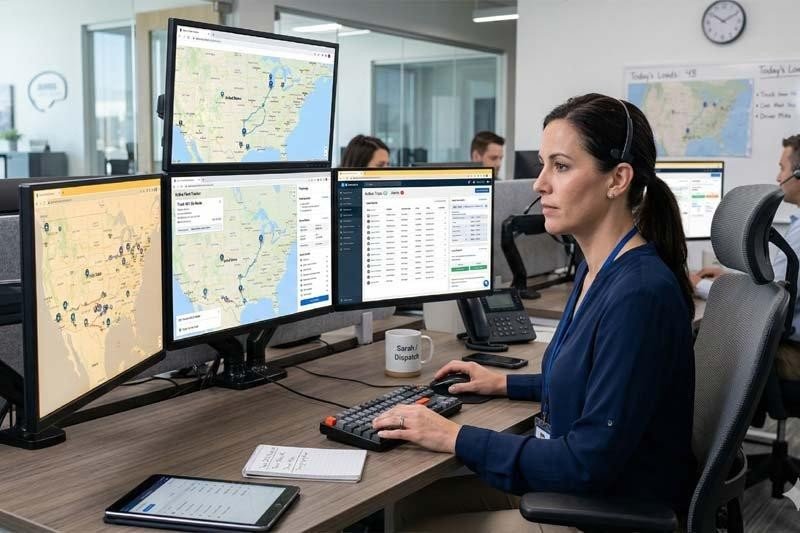
Running a trucking business involves more than just driving. Owner-operators need to find loads, negotiate rates, communicate with brokers, track shipments, and manage paperwork. This is where a truck dispatcher can help.
A truck dispatcher supports carriers with daily operations, helping them save time and focus on driving. But what does a dispatcher actually do throughout the day?
1. Searching for Loads
One of a dispatcher's main responsibilities is finding available loads that match the carrier's truck type, preferred lanes, and schedule.
Dispatchers use load boards, broker connections, and other freight resources to identify suitable opportunities.
2. Negotiating Rates
After finding a suitable load, dispatchers communicate with brokers to discuss rates, pickup and delivery schedules, and load requirements.
They consider the carrier's preferred rate per mile and operating needs while negotiating, with the carrier retaining control over load approval.
3. Booking Loads
Once the carrier approves a load, the dispatcher helps coordinate the booking process, confirms shipment details, and reviews the rate confirmation for accuracy.
4. Communicating With Brokers
Dispatchers communicate with brokers to confirm pickup and delivery information, clarify load requirements, and address any changes or issues during transportation.
5. Tracking Shipments
During transportation, dispatchers may monitor shipment progress and coordinate updates between the driver and broker. This helps keep everyone informed about delivery schedules and unexpected delays.
6. Managing Paperwork
Dispatchers assist with organizing important load documents, such as rate confirmations, bills of lading (BOL), and proof of delivery (POD).
Keeping paperwork organized can make invoicing and payment follow-ups easier for carriers.
7. Planning the Next Load
While a driver is completing a delivery, dispatchers may search for the next suitable load based on the truck's destination, availability, and preferred lanes.
Planning ahead can help reduce unnecessary downtime, although available freight depends on market conditions.
8. Handling Daily Issues
Delays, cancellations, schedule changes, and broker concerns can happen in trucking. Dispatchers help communicate with the relevant parties and coordinate solutions within their responsibilities.
Why Do Owner-Operators Need a Dispatcher?
Managing all these tasks while driving can be time-consuming. A dispatcher can help reduce administrative work, organize load arrangements, and support communication with brokers.
This allows owner-operators to focus more on driving, maintaining their trucks, and managing their businesses.
Final Thoughts
A truck dispatcher does much more than search for loads. From negotiating rates and booking shipments to tracking deliveries and organizing paperwork, dispatchers help keep daily trucking operations coordinated.
Why Choose Volecore Dispatch?
At Volecore Dispatch, we help owner-operators find loads that match their preferred lanes and equipment, negotiate rates, communicate with brokers, track shipments, and manage paperwork. Our goal is to make dispatching easier so you can spend more time on the road and focus on growing your business.