
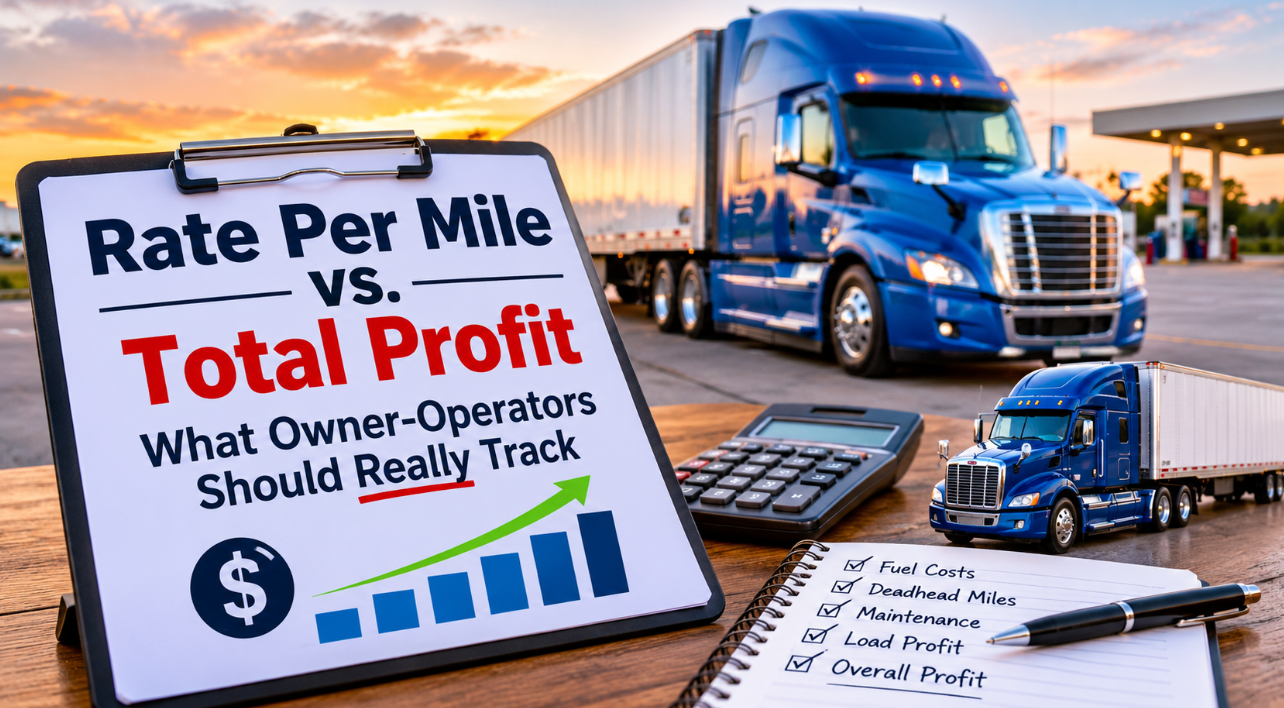
Every trucker loves to hear a big rate per mile. A load that pays $3.00 a mile sounds much better than one that pays $2.40. But the rate per mile is only one piece of the story, and if it is the only number you watch, you can end up with a truck that is busy but not profitable.
In this blog, we explain why rate per mile can be misleading, what numbers owner-operators should track instead, and how to compare loads the smart way.
What Is Rate Per Mile?
Rate per mile is the amount a load pays divided by the loaded miles. If a load pays $1,500 for 500 miles, the rate is $3.00 per mile. It is a quick way to compare loads, and brokers and load boards use it all the time.
The problem is that it only counts the miles you are paid for. It ignores the empty miles you must drive to pick up the freight, and it ignores what the trip costs you.
Why a High Rate Can Still Mean Low Profit
A high rate can hide problems such as:
A long deadhead to the pickup location
A drop-off in a market with little freight
Long waits at the shipper or receiver
High fuel use, tolls or lumper fees
Several days of waiting for a reload
The Numbers Owner-Operators Should Really Track
1. All-In Rate Per Mile
Divide the total revenue by all miles, loaded and empty. This shows what your truck really earned for every mile it moved.
2. Cost Per Mile
Add your fixed and variable costs, such as truck payment, insurance, fuel, maintenance, tires, permits and parking. Divide by your miles. Any load must pay above this number to make money.
3. Profit Per Trip
Take the total revenue and subtract fuel, tolls, fees and your other costs for that trip. What remains is what you can really keep.
4. Profit Per Day
Time matters. A short load that delivers quickly and reloads fast can beat a long load that ties up your truck for days. Divide the trip profit by the number of days the truck is tied up, including waiting time.
5. Deadhead Percentage
Divide your empty miles by your total miles. If this number is high, even good rates will not save your profit.
How to Compare Loads Before You Accept
Use this quick checklist before you say yes:
How far is the pickup from where I will be?
What is the total revenue and the all-in rate per mile?
What will fuel, tolls and fees cost on this trip?
How long will the truck be tied up, including loading and unloading?
What does freight look like near the drop-off for my next load?
Is the rate above my cost per mile with room for profit?
Common Mistakes to Avoid
Chasing the highest rate per mile on every load
Not knowing your real cost per mile
Forgetting about empty miles and waiting time
Ignoring the market at the drop-off location
Never reviewing your numbers after each month
How Volecore Dispatch Helps You Choose Better Loads
At Volecore Dispatch, we do not look at the rate alone. We review the total trip, including empty miles, drop-off market, timing and your target profit, before we recommend a load. We also negotiate rates and handle the paperwork so you can stay focused on driving.
Want help choosing loads that really pay? Contact Volecore Dispatch today and let our team work on your next load.