
What Is a Load Board and How Do Dispatchers Use It?
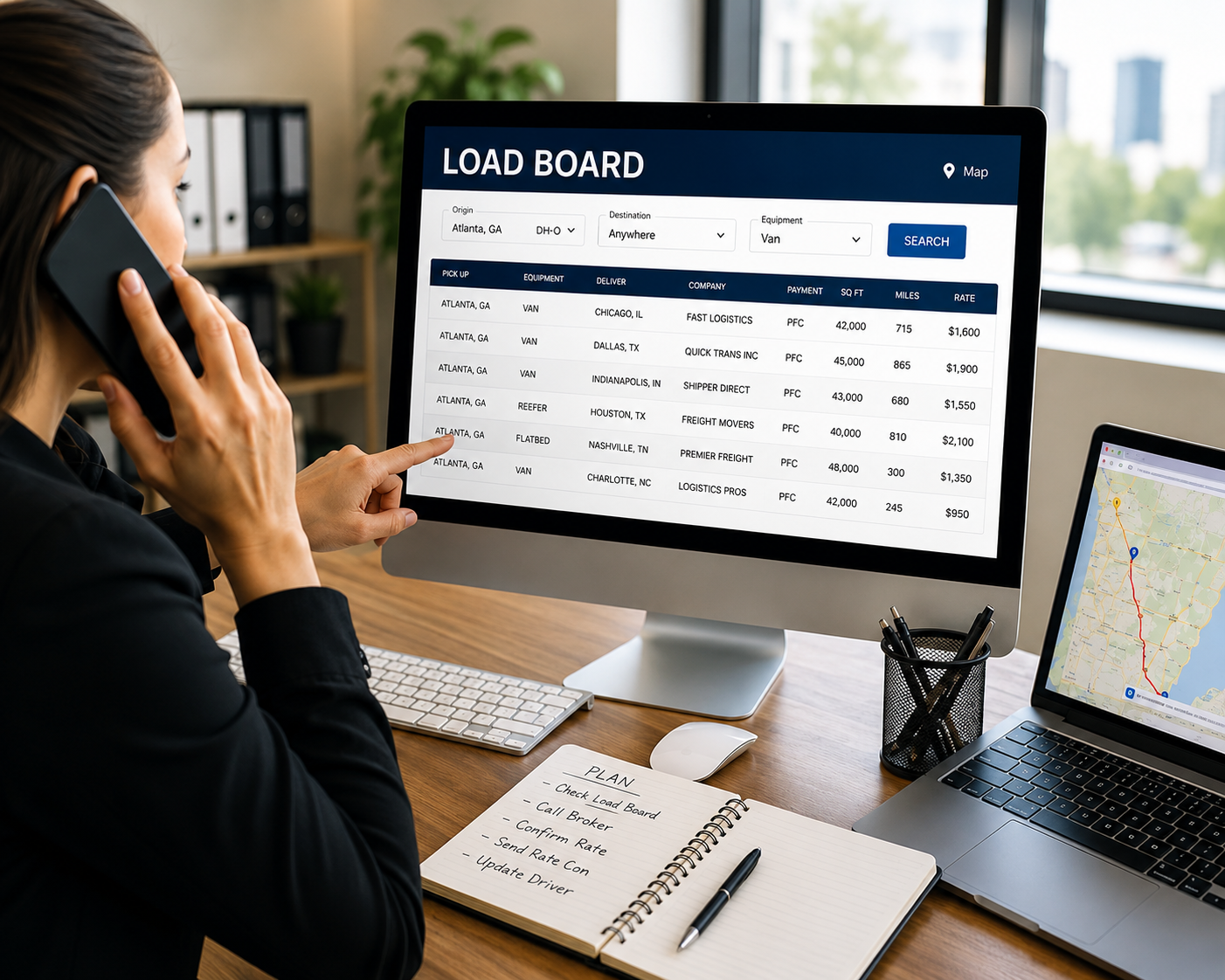
For a new truck dispatcher, one of the most important tools to understand is a load board. Load boards help dispatchers find available freight for carriers and identify loads that match a truck’s equipment, location, schedule, and preferred lanes.
At Volcore Dispatch, load boards are an important part of the process we use to help carriers find suitable freight and keep their trucks moving.
What Is a Load Board?
A load board is an online marketplace where brokers and shippers post available freight that needs to be transported.
Dispatchers and carriers can search these postings based on different requirements, such as:
Pickup and delivery locations
Equipment type
Pickup date
Delivery date
Load weight
Commodity
Total miles
Rate
Popular load boards in the trucking industry include platforms such as DAT and Truckstop.
How Do Dispatchers Use Load Boards?
Using a load board is more than simply searching for the highest-paying load. A dispatcher needs to find the right load for the right truck.
1. Check the Truck's Location
The first step is knowing where the truck is and when it will be available.
For example:
Truck: Dry Van
Location: Atlanta, GA
Available: Tomorrow morning
The dispatcher can then search for loads leaving Atlanta or nearby areas.
2. Find Loads That Match the Truck
Dispatchers filter available loads according to the carrier's equipment and preferences.
For example:
Dry Van → Dry Van freight
Reefer → Temperature-controlled freight
Flatbed → Flatbed freight
Power Only → Trailer-required loads
At Volcore Dispatch, we focus on matching available freight with the carrier's equipment, location, and preferred lanes.
3. Review the Rate
A dispatcher should always evaluate whether the load makes financial sense.
One basic calculation is Rate Per Mile (RPM):
RPM = Total Rate ÷ Total Miles
For example:
A load paying $1,800 for 900 miles would have:
$1,800 ÷ 900 = $2.00 RPM
However, RPM is not the only factor. Dispatchers should also consider deadhead miles, fuel costs, tolls, market conditions, and where the truck will be after delivery.
4. Contact the Broker
Once a suitable load is found, the dispatcher contacts the broker to confirm:
Is the load still available?
What is the exact pickup and delivery information?
What is the weight and commodity?
What is the offered rate?
Are there special requirements?
Is the rate negotiable?
Never assume a load is available just because it appears on a load board. Always confirm with the broker.
5. Review the Rate Confirmation
After the carrier agrees to take the load, the dispatcher should carefully review the Rate Confirmation.
Important details include:
Pickup and delivery addresses
Appointment times
Agreed rate
Load information
Special instructions
Detention or layover terms
Broker information
The dispatcher then provides the confirmed load details to the carrier or driver.
What Makes a Good Load?
The highest-paying load is not always the best load.
A dispatcher should consider:
Good Rate + Reasonable Miles + Low Deadhead + Good Destination
For example, a $2,500 load may look attractive, but if the truck has to drive 200 unpaid miles to pick it up and delivers to an area with very little outbound freight, it may not be the best option.
A good dispatcher thinks about the next load as well as the current load.
How Volcore Dispatch Helps
Searching for freight is only one part of successful truck dispatching. Dispatchers also need to communicate with brokers, negotiate rates, manage paperwork, coordinate with drivers, and monitor loads.
Volcore Dispatch helps carriers simplify this process by providing dedicated dispatch support, including:
Load searching
Rate negotiation
Broker communication
Load and paperwork management
Route and load planning
Driver coordination
Our goal is simple: help carriers spend less time searching for freight and more time focusing on their trucks and business.
Final Thoughts
A load board is one of the most valuable tools for a truck dispatcher, but knowing how to use it effectively takes practice.
A successful dispatcher doesn't simply look for any available load. They look for the right load, at the right rate, for the right truck and destination.
With the right strategy and professional dispatch support from Volcore Dispatch, carriers can make more informed load decisions and keep their operations organized and moving forward.