
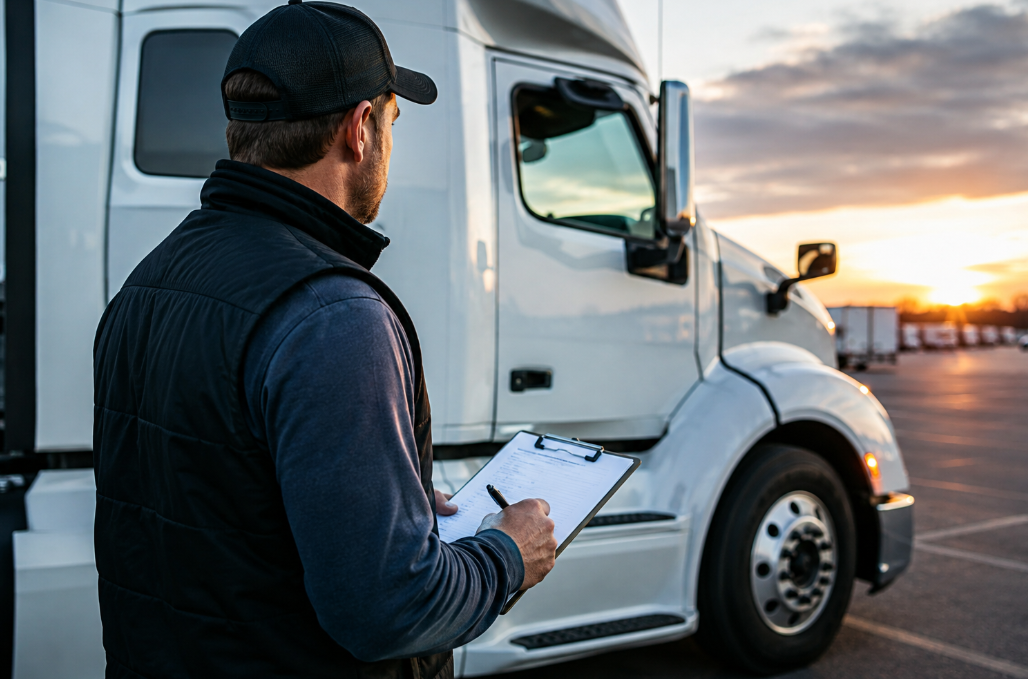
Getting your truck is a big milestone, but the real work starts when you’re ready to operate. Before taking your first load, make sure these important steps are covered.
1. Complete Your Truck Registration
Make sure your truck is properly registered and that you have the required plates, permits, and documents for the states you operate in.
2. Secure Trucking Insurance
Get the required commercial auto liability and other appropriate coverage. Keep your insurance documents easily accessible.
3. Check Your Authority & Compliance
Confirm that your USDOT and operating authority are active and that you meet applicable FMCSA requirements.
4. Inspect Your Truck
Do a complete inspection before your first trip. Check:
Tires and brakes
Lights and signals
Engine fluids
Battery
Safety equipment
Trailer connections
5. Set Up Your ELD
Install and learn how to use a compliant Electronic Logging Device (ELD). Understanding your hours of service can help prevent violations and delays.
6. Create an Emergency Fund
Unexpected repairs can be expensive. Set aside money for maintenance, tires, breakdowns, and other emergencies.
7. Find Reliable Freight
Use load boards, brokers, direct customers, or a dispatcher to find suitable loads. Always check the rate, mileage, pickup time, delivery requirements, and payment terms.
8. Know Your Operating Costs
Calculate your cost per mile, including fuel, insurance, maintenance, truck payments, tolls, and other expenses. This helps you avoid unprofitable loads.
9. Keep Your Paperwork Organized
Save rate confirmations, bills of lading, receipts, fuel records, invoices, and inspection documents. Good records make your business easier to manage.
10. Plan Your Routes
Before accepting a load, check the route, fuel stops, tolls, weather, traffic, and delivery schedule. Good planning can save both time and fuel.
11. Build Relationships
Treat brokers, shippers, receivers, and customers professionally. Reliable communication can lead to better opportunities and repeat business.
12. Consider a Truck Dispatcher
A professional dispatcher can help with load searching, rate negotiation, broker communication, paperwork, and trip planning, allowing you to focus more on driving.
Final Thoughts
Becoming an owner-operator is more than owning a truck. Success comes from choosing profitable loads, controlling expenses, maintaining your equipment, and staying organized.
Start with the basics, build good habits, and focus on profitable miles—not just more miles.
Volecore Dispatch helps owner-operators find suitable freight and spend less time searching for their next load.